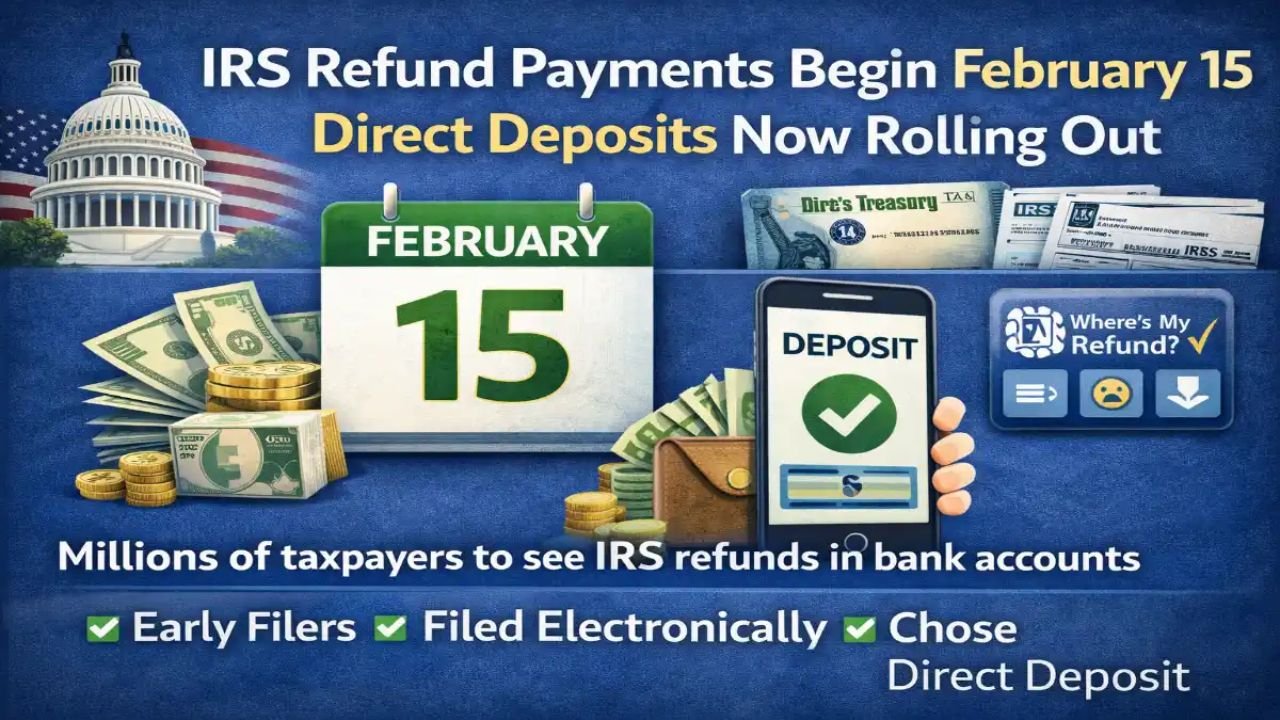
IRS Refund Payments Begin February 15, 2026: What to Expect as Direct Deposits Roll Out
The 2026 tax season has officially entered a critical phase. Beginning February 15, the Internal Revenue Service has started issuing the first major wave of federal tax refunds. For millions of Americans who filed early and selected direct deposit, that means money could already be landing in bank accounts.
As inflation, household expenses, and financial planning remain top priorities, tax refunds are more than just annual paperwork—they are a key liquidity moment for many families. Here is what taxpayers need to know about the February 15 refund rollout, who is getting paid first, and how to avoid delays.
Why February 15 Matters in the 2026 Tax Season

Every year, the IRS processes millions of returns in batches. Mid-February typically marks the first significant refund release after early-season filings are reviewed and approved.
This initial wave generally includes:
- Early electronic filers
- Taxpayers who chose direct deposit
- Returns without errors or special review flags
- Simple returns with standard deductions
If you filed as soon as the IRS opened and your return was accurate, you are likely part of this first payout group.
Who Is Receiving Refunds First?

The IRS prioritizes efficiency and accuracy. Refunds are typically issued fastest to taxpayers who meet certain criteria.
Fastest Processing Group
You are more likely to receive your refund early if you:
- Filed electronically (e-filed)
- Chose direct deposit
- Submitted complete and accurate information
- Avoided complex credit claims requiring manual review
Electronic filing significantly reduces processing time compared to paper returns. Combined with direct deposit, it creates the fastest possible refund pathway.
How Long Do Direct Deposits Take?

Once a refund is marked as “Refund Sent,” the timeline moves quickly.
Typical Deposit Timeline
- 1–3 business days for most direct deposits
- Some banks may release funds early
- Processing speed varies by financial institution
Even if the IRS sends the payment immediately, your bank controls when it becomes visible in your account. Premium online banks sometimes post funds earlier than traditional institutions.
Paper Check Refunds Take Longer
Taxpayers who selected a mailed check should prepare for additional waiting time.
Paper refund timelines often include:
- Printing and mailing delays
- Postal delivery time
- Potential seasonal backlogs
Paper checks can take several weeks to arrive, especially during peak filing season. For future filings, direct deposit remains the safest and fastest option.
Why Some Refunds Are Delayed
Not every return qualifies for immediate processing. Certain factors can trigger additional review.
Common Reasons for Refund Delays
- Claiming the Earned Income Tax Credit (EITC)
- Claiming the Additional Child Tax Credit (ACTC)
- Incorrect bank account numbers
- Identity verification requirements
- Income mismatches with employer-reported data
- Missing documentation
Refunds involving refundable credits often undergo mandatory review, which can push payment into late February or March.
How to Track Your IRS Refund Status
The IRS provides an official tracking system that allows taxpayers to monitor their return.
Refund Status Stages
- Return Received
- Refund Approved
- Refund Sent
Once your status updates to “Refund Sent,” the deposit is typically imminent.
Checking status daily is unnecessary. Updates are usually made once per day.
What This First Refund Wave Signals
The February 15 refund rollout confirms that IRS processing is fully underway for the 2026 season. For early filers, this is a strong indicator that the system is moving efficiently.
For those who have not yet filed, there is still time to position yourself for a faster refund.
Smart Filing Tips
- File electronically
- Double-check personal information
- Verify Social Security numbers
- Use direct deposit
- Ensure income documents match IRS records
Accuracy remains the single most important factor in avoiding delays.
Planning Around Your Refund
Many financially strategic households use refunds intentionally rather than impulsively. Common uses include:
- Paying down high-interest debt
- Boosting emergency savings
- Covering annual expenses
- Investing in retirement accounts
- Funding home or education upgrades
Treating your refund as part of a broader financial plan can maximize its long-term value.
Frequently Asked Questions
When will I see my refund if it was sent on February 15?
Most direct deposits arrive within one to three business days, depending on your bank.
Why does my friend have their refund and I do not?
Processing times vary based on filing date, return complexity, and banking institution.
Are refund amounts higher in 2026?
Refund amounts depend on individual income, withholdings, and credits—not a universal increase.
Can I speed up my refund after filing?
No. Once submitted, processing follows IRS review timelines. Accuracy at filing is what speeds things up.
What if my refund is delayed?
Continue monitoring your refund status. If additional action is needed, the IRS will notify you directly.
Final Takeaway
IRS refund payments beginning February 15 mark the first major payout cycle of the 2026 tax season. Early electronic filers who selected direct deposit are seeing funds arrive first, while others may follow in the coming weeks.
Processing times vary based on return accuracy, credit claims, and banking institutions. Filing electronically and choosing direct deposit remains the most efficient strategy.
As the season progresses, staying informed and monitoring official IRS updates will ensure you know exactly where your refund stands—and how to make the most of it once it arrives.