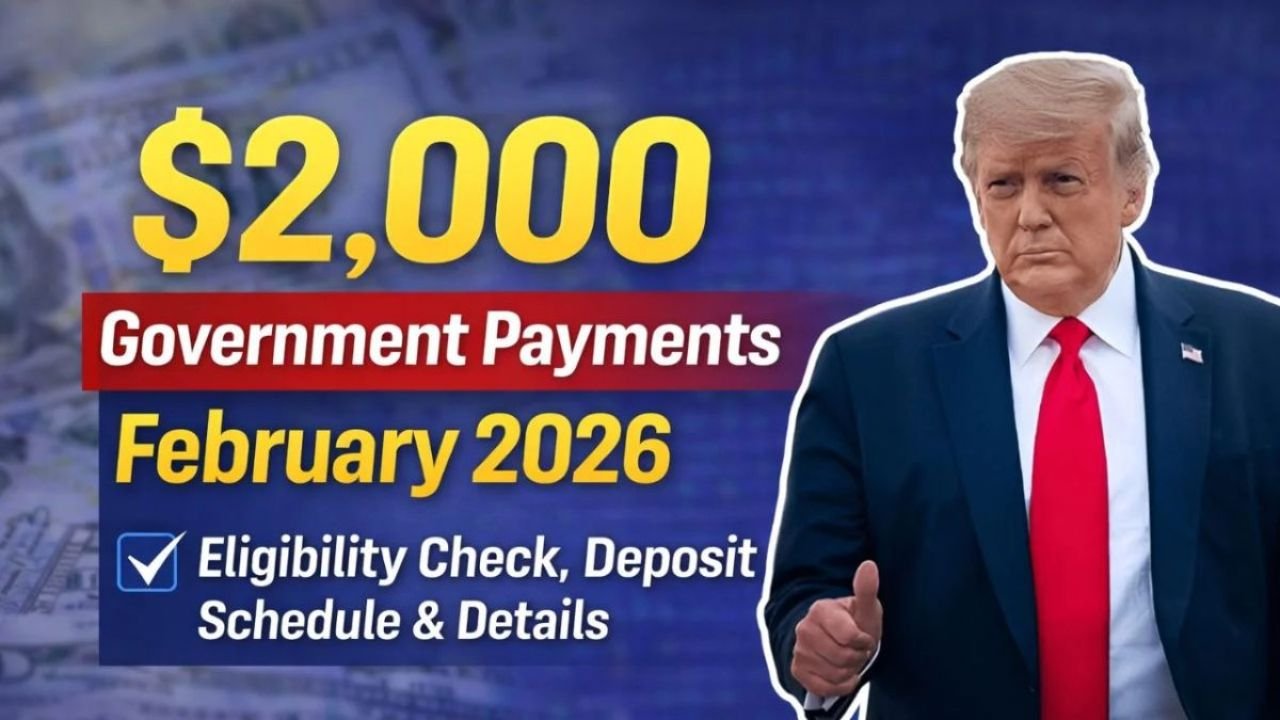
$2,000 Federal Payment for All February 2026: Timeline, Eligibility Rules and Latest Updates
In early 2026, conversation around a possible $2,000 federal payment for all Americans has resurfaced across digital platforms. Headlines and short-form videos often describe it as a guaranteed deposit arriving in February. For households managing elevated living costs, the prospect of direct financial relief is compelling.
However, clarity is essential. As of February 2026, no $2,000 federal payment for all has been officially approved. While discussions continue in policy circles, there is currently no enacted legislation authorizing a nationwide deposit.
Understanding what is confirmed, what remains speculative, and how federal payments actually move from proposal to reality can help households plan responsibly.
Is the $2,000 Federal Payment Approved?
At this time, Congress has not passed a bill authorizing a universal $2,000 direct deposit. No federal agency, including the IRS or the U.S. Treasury, has announced an official payment schedule, eligibility framework, or distribution timeline.
For any nationwide payment to move forward, several formal steps must occur:
- A bill must be introduced in Congress
- The House and Senate must pass the legislation
- The President must sign it into law
- Federal agencies must implement payment procedures

Until those steps are completed, no payment is legally authorized.
Claims suggesting deposits are already scheduled or automatically approved are not supported by official government communication.
Why the $2,000 Payment Is Being Discussed Again
The renewed attention is closely tied to ongoing affordability concerns. Although inflation has moderated compared to peak levels in prior years, many essential expenses remain elevated. Housing costs, healthcare premiums, food prices, and insurance rates continue to strain middle- and lower-income households.

Direct cash relief is often discussed during periods of economic pressure because it is simple, fast, and visible. The $2,000 amount is especially familiar due to past stimulus proposals and payments during earlier economic disruptions.
That familiarity makes it easy for online discussions to blur the line between policy debate and policy approval.
Why February 2026 Is Frequently Mentioned
February is a logical reference point for several reasons.
First, it coincides with tax season. Millions of Americans receive tax refunds between February and March. Many of those refunds fall within the $1,500 to $3,000 range, which can create confusion when deposits appear close to $2,000.
Second, previous federal relief programs used tax return data to distribute payments early in the year. This historical pattern leads some commentators to assume that if relief were approved, February would be a likely launch month.
However, no official February 2026 payment date has been announced.
How a $2,000 Payment Would Likely Be Distributed
If Congress were to approve a $2,000 federal payment, the government would likely rely on existing infrastructure.
Direct Deposit
The fastest method would be direct deposit using bank account information already on file with the IRS or Social Security Administration. This approach minimizes delays and administrative costs.
Paper Checks and Debit Cards
Individuals without banking details on file could receive paper checks or prepaid debit cards. These methods typically take longer due to mailing timelines and verification processes.
Automatic Processing
In most previous programs, eligible individuals did not need to submit new applications. Eligibility was determined using recent tax return data or benefit records. A similar structure would likely be used again.
That said, specific instructions would only become available if legislation is finalized.
Potential Eligibility Rules
Eligibility remains one of the largest unknowns. Policy discussions have suggested several possible structures:
Universal Model
Some proposals mention sending payments to most adult citizens regardless of income. This approach is simpler but more expensive from a federal budget standpoint.
Income-Based Phaseouts
More commonly, draft ideas include income thresholds. Under this model:
- Lower- and middle-income households receive the full amount
- Payments phase out gradually for higher earners
- High-income individuals may receive reduced amounts or none at all
Inclusion of Benefit Recipients
Many proposals reference inclusion of Social Security, SSI, SSDI, and veterans’ benefit recipients. These groups often receive priority consideration due to fixed-income constraints.
Until legislation is passed, no eligibility criteria are guaranteed.
Would the Payment Be Taxable?
In past federal relief programs, stimulus payments were not treated as taxable income. Lawmakers typically include explicit language stating that such payments will not increase tax liability or reduce eligibility for federal benefits.
If a new $2,000 payment were approved, similar protections would likely be written into law. However, without enacted legislation, no official tax treatment has been defined.
Economic and Budget Considerations
Federal cash payments involve significant fiscal planning. Lawmakers must weigh:
- Total program cost
- Budget deficit impact
- Inflationary pressure
- Economic growth projections
Unlike emergency pandemic relief, current economic conditions do not involve a formally declared national crisis. This changes the political and financial dynamics around large-scale stimulus proposals.
Policy discussions can move quickly, but they can also stall for months depending on negotiations and budget priorities.
Scam Alerts and Misinformation Risks
Whenever rumors of federal payments spread, fraudulent activity tends to increase.
Common warning signs include:
- Messages claiming you must “register” to receive funds
- Requests for processing fees
- Urgent demands for personal information
- Links to unofficial websites
Federal agencies do not charge fees to release payments. They do not request sensitive financial information through unsolicited texts or social media messages.
The safest way to verify information is through official IRS or Treasury communications.
What Households Should Do Now
There is currently no action required. No application process is open, and no payment has been scheduled.
Practical steps include:
- Filing tax returns accurately and on time
- Ensuring direct deposit details are up to date
- Monitoring official government updates
- Avoiding financial planning based on unconfirmed income
Budget decisions should rely only on verified sources of funds.
Final Outlook for February 2026
The discussion surrounding a $2,000 federal payment reflects real financial pressure experienced by many Americans. Rising costs continue to shape everyday spending decisions, and interest in direct relief is understandable.
However, as of February 2026, no $2,000 federal payment for all has been approved or scheduled. The topic remains part of policy debate rather than enacted law.
If legislation is passed in the future, details about eligibility, distribution methods, and timelines will be clearly announced by federal authorities. Until then, staying informed through official channels and maintaining disciplined financial planning remains the most responsible approach.