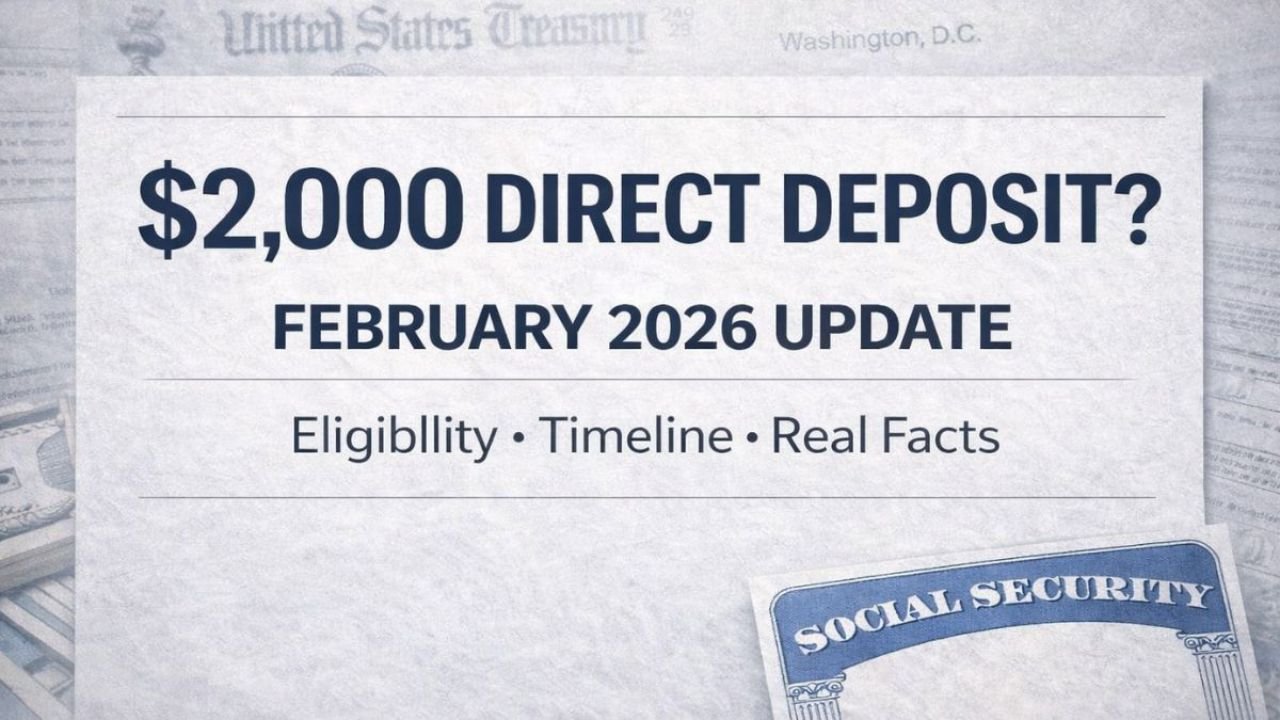
As February 2026 unfolds, conversations about a supposed $2,000 federal direct deposit are once again gaining momentum. Social media posts, viral videos, and bold headlines suggest that a new nationwide payment is on the way. For households navigating elevated costs for housing, groceries, insurance, and healthcare, the promise of extra funds naturally captures attention.
But before adjusting your budget or making financial decisions based on these claims, it’s essential to separate speculation from verified policy. At this time, there is no newly approved universal $2,000 federal direct deposit scheduled for February 2026. No legislation has been passed authorizing such a payment, and no federal agency has issued official instructions confirming a rollout.
Understanding the facts protects both your finances and your peace of mind.
Has a $2,000 Federal Payment Been Approved?
In the United States, large-scale federal payments cannot be issued without a formal legal process. For any new stimulus-style deposit to move forward, several steps must occur:
- A bill must be introduced in Congress
- Both chambers must pass the legislation
- Funding must be allocated
- The President must sign the bill into law
- Federal agencies must announce implementation details
As of now, none of these steps have occurred for a universal $2,000 February 2026 payment. That means claims suggesting deposits are already approved or guaranteed are not supported by official action.

Federal agencies cannot legally send nationwide payments without authorization. When legitimate programs are approved, they are publicly announced through official government channels and widely reported by major news outlets.
Why the $2,000 Claim Keeps Returning
The $2,000 figure is not random. It has appeared in past relief discussions and previous federal payments, which makes it familiar and believable. When the same amount resurfaces in headlines, many assume history is repeating itself.
There are several reasons why the rumor spreads quickly:
1. Familiar Numbers From Prior Relief Programs

Earlier federal payments in previous years included amounts close to $2,000. That familiarity adds credibility to new claims, even when no new program exists.
2. Tax Season Timing
February is one of the busiest months for tax refunds. Many early filers receive refunds ranging from $1,500 to $3,000 depending on income, withholding, and credits. When someone sees a $2,000 deposit, it may be mistaken for a special stimulus payment.
3. Viral Amplification
Online platforms often use confident language such as “approved” or “confirmed” even when describing policy discussions or proposals. Repetition can create the illusion of certainty.
Where February 2026 Deposits Are Actually Coming From
Most deposits appearing in February are tied to routine, ongoing programs.
Regular Federal Benefit Payments
Monthly payments such as retirement benefits, disability benefits, and veterans’ benefits follow established schedules. These payments are not new and are not part of a special one-time deposit initiative.
Tax Refunds
Tax season begins early in the year. Individuals who file electronically and select direct deposit often receive refunds within a few weeks if there are no processing issues. Refund amounts vary widely, but some may total around $2,000 depending on individual circumstances.
These refunds are simply the return of overpaid taxes or refundable credits. They are not stimulus checks.
When routine benefits and tax refunds arrive around the same time, it can create confusion and fuel rumors of a coordinated payout.
Why Early-Year Payments Cause Confusion
January and February frequently bring overlapping financial activity:
- Cost-of-living adjustments may increase benefit amounts
- Tax filing season opens
- Refunds begin processing
- Some programs reset annual benefit calculations
Bank processing schedules also vary. Weekends and holidays can shift deposit dates slightly earlier or later than expected. When people compare deposit dates without context, misunderstandings spread quickly.
A timing shift does not signal a new federal program.
How Federal Payments Are Actually Calculated
Federal deposits are rarely uniform amounts sent equally to everyone.
Retirement and disability benefits are based on earnings history and eligibility criteria. Veteran payments depend on service-related factors. Tax refunds depend on personal tax liability, credits, deductions, and withholding amounts.
Because these systems are individualized, deposit amounts vary significantly from one person to another.
Two households receiving deposits in the same week may be participating in entirely different programs.
How to Verify Whether a Payment Is Real
Legitimate federal payment programs share consistent characteristics:
- They are backed by signed legislation
- They are announced on official government websites
- They include detailed eligibility rules
- They provide clear implementation instructions
They do not require fees to release funds. They do not ask for sensitive information through unsolicited messages. They do not rely on private links circulating through messaging apps.
If those elements appear, caution is warranted.
Protecting Yourself From Payment Scams
Whenever rumors about government money trend online, scams increase.
Common red flags include:
- Messages claiming you are “pre-approved”
- Requests to confirm banking details through unfamiliar links
- Urgent instructions demanding immediate action
- Requests for processing fees
Federal agencies do not charge fees to release payments. They do not initiate payment confirmation through random texts or social media comments.
The safest way to confirm information is by visiting official government websites directly.
What to Expect in February 2026
For February 2026, households should expect:
- Regularly scheduled federal benefit payments
- Tax refunds if returns are filed and approved
- Normal variations in deposit timing due to banking processes
There is no confirmed universal $2,000 federal direct deposit program at this time.
Planning around verified income rather than unapproved proposals helps prevent financial strain and disappointment.
Final Perspective
The widespread discussion about a $2,000 direct deposit in February 2026 reflects genuine financial pressures facing many households. The interest is understandable. However, as of now, no universal payment has been authorized or scheduled.
Most deposits appearing this month are routine benefits or personal tax refunds — not a new stimulus initiative.
Staying informed through official sources and relying on confirmed information is the most reliable strategy for managing your finances responsibly in 2026.